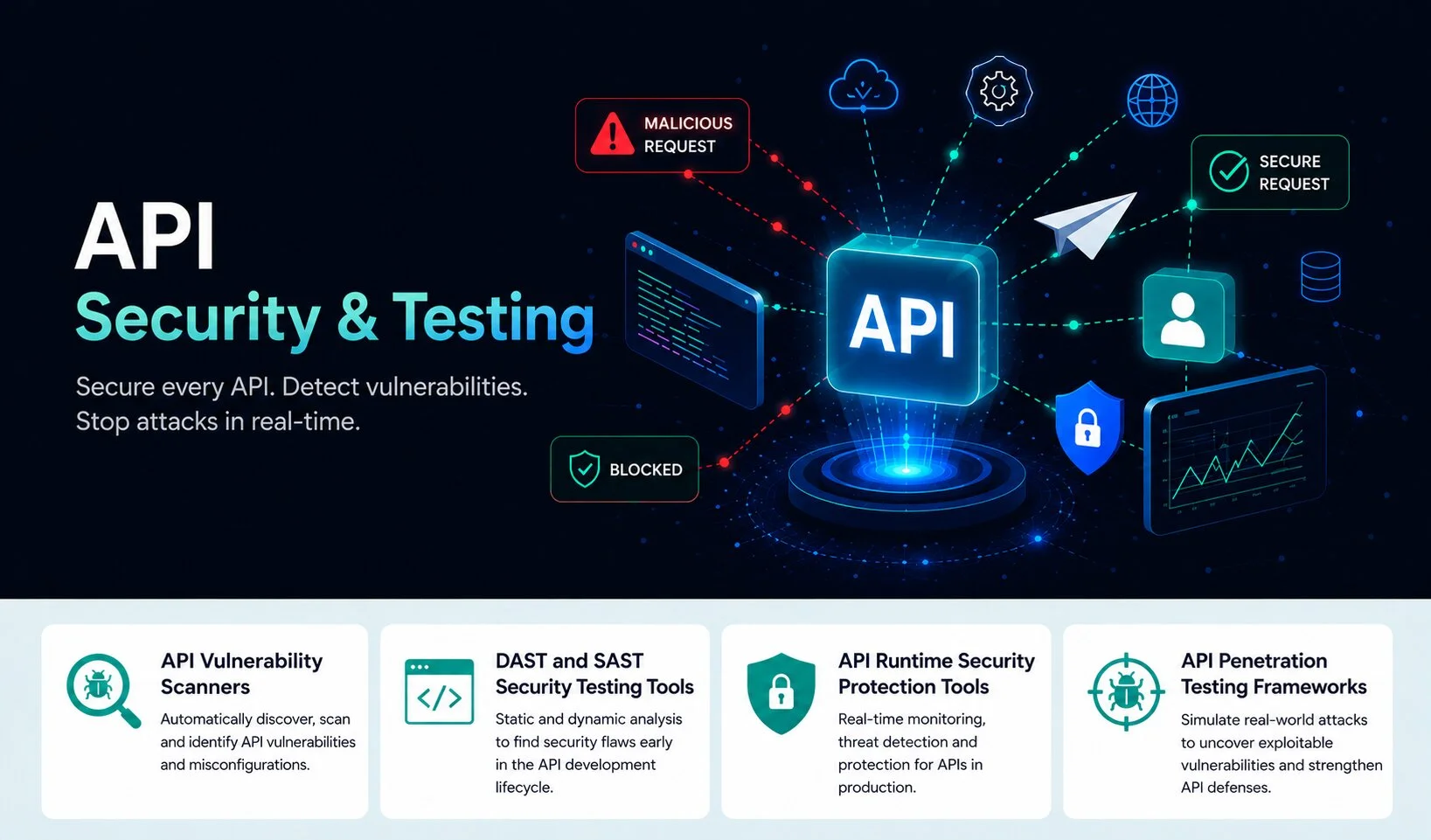
Applications Program Interfaces (APIs) are now the backbone of most modern apps. Mobile apps, payment gateways, cloud-based services, & enterprise-level software depend heavily on APIs to function. As businesses leverage APIs in various aspects of their operations, cyber attackers also try to target APIs. This is why API security testing has gained immense importance for modern cybersecurity and application security testing.
Instead of focusing on the protection of websites & other applications, businesses are now also securing the APIs that facilitate communication between different systems. One compromised API endpoint might expose sensitive information, such as customer details, payment information, business secrets, and even authentication mechanisms. There are increasing numbers of attacks related to APIs around the world, which has led companies to spend a lot of money on API security tools and API security testing frameworks.
What is API Security Testing?
API security testing refers to a testing method aimed at exposing vulnerabilities & security holes in APIs that would on the other hand result in access by malicious users, data leakage, and cyber attacks. This kind of testing ensures that APIs can manage authentication, authorization, and encryption effectively and safely transfer the data.
In contrast to functional testing, which tests whether an application performs its functions correctly, security testing aims to check whether attackers can use APIs for malicious purposes. Therefore, security testing should involve the simulation of attacks and exposure of vulnerabilities. Modern APIs expose business logic, client data, payment processors, and even cloud computing services.
Why Is API Security Testing Important and Its Benefits?
API security testing is an important way of protecting applications, cloud infrastructure, and business systems against attacks.
Protects Sensitive Data:This kind of testing will assist businesses in protecting customer data, payment information, health care details, & other confidential data from unauthorized accessed by hackers.
Prevents Financial Losses: Cyber attacks and data leaks result in financial losses and even lawsuits. The risk of an attack is minimized by security testing.
Compliance with Security Regulations: Organizations dealing with sensitive data have to follow a different security requirements, such as GDPR, HIPAA, PCI-DSS, and ISO 27001.
Application Stability Improvement: Testing provides the necessary protection for APIs, which increases application stability and minimizes downtime risks caused by security issues.
DevSecOps Implementation: Companies performing continuous application security testing can easily incorporate security into their CI/CD process.
Common API Security Risks
It is important for organizations to understand such threats so that they can able to improve their security in time.
Broken Authentication: This security risk gives attackers an opportunity to bypass the login mechanism put in place by the organization and gain access to services and accounts illegally. This is caused by poor token validation, insecure authentication techniques, and poor session handling.
Broken Authorization: In broken authorization, an attacker accesses resources or data he or she should not have access to according to his or her user role. This is perhaps the most damaging of all API vulnerabilities since sensitive information may be disclosed through it.
Injection Attacks: These involve malicious code being introduced into the API request to tamper with the backend server and manipulate the database. The main cause of these vulnerabilities includes failing to validate the data sent by the user.
Excessive Data Exposure: There are some APIs that will return more data than necessary from the server. An attacker might then exploit this response by accessing sensitive data belonging to customers or businesses.
Security Misconfiguration: This includes having incorrect server configurations, exposing server endpoints to hackers, poor encryption settings, and insecure cloud storage.
Shadow APIs: Shadow APIs refer to undocumented or ungoverned APIs that are accessible from the web. Such APIs are typically very vulnerable to attacks by hackers.
What API Security Testing Tools Should Businesses Choose?
Advanced API security tools are employed by contemporary businesses to detect vulnerabilities and monitor APIs during runtime. The use of proper tools enhances visibility and threat detection.
API Vulnerability Scanners: The automatic API vulnerability scanners find out all security weaknesses, configuration issues, and vulnerable endpoints.
DAST and SAST Security Testing Tools: There are DAST and SAST security testing tools which help to find out vulnerabilities at both development and runtime phases.
API Runtime Security Protection Tools: Runtime monitoring tools allow organizations to discover any suspicious activity within the APIs and find out shadow APIs and attacks.
API Penetration Testing Frameworks: The penetration testing framework is used by cybersecurity professionals to mimic sophisticated attacks on APIs to assess their ability to withstand these threats.
How Can Ammune Help with Testing API Security?
Ammune helps companies to protect their APIs through AI-based threat detection, API discovery, and continuous monitoring. The platform assists firms in enhancing their API security as well as protecting their applications generally. That is why it is one of the best companies for api security testing.
AI-Driven API Security Products: Ammune assists companies in securing their APIs with advanced AI-driven security products that can meet the needs of contemporary businesses and cloud-native infrastructure.
Real-Time Threat Detection Capabilities:The tool enables enterprises to uncover suspicious behavior in API operations, pinpoint exposed API endpoints, and monitor any potential threat in real-time before it turns into a severe security issue.
Improving API Visibility: In addition to enhancing API visibility, Ammune also helps businesses discover undocumented or shadow APIs that may put businesses at risk.
DevSecOps Integration: The system promotes the integration of DevSecOps methodology through embedding security within development processes and continuous deployments.
Improved Security for Contemporary Businesses: Ammune assists companies in enhancing their resilience, ensuring compliance, and safeguarding valuable business information from API based attacks.
Conclusion
As cloud computing, mobile applications, microservices, and digital transformation trends have become more common in the software industry, there is an increased importance of API security. But because of their increased popularity, APIs have become one of the most vulnerable assets that can be exploited by cybercriminals.
API security testing assists companies to discover vulnerabilities, ensure safety of data, compliance, and security of their digital assets. Continuous application security testing together with latest API security testing tools and security practices can be very effective in improving cybersecurity.